
Sports injury prevention for everyday athletes
Gym, running, football or Pilates, the principles are the same. How to train smart, recover well and spot problems before they sideline you.
B.Chiro.Sc, M.Chiro (Macquarie University), AHPRA registered chiropractor
Most sports injuries are not accidents. They are the result of load going up faster than the body can adapt, or of a stiff or weak link somewhere in the chain that another joint has been compensating for.
Five things that matter most
- Increase your training load gradually: no more than about 10 percent per week.
- Warm up with movement, not static stretching. Save the long holds for after.
- Sleep seven to nine hours. It is the single most underrated recovery tool.
- Train the hips and upper back. Stiffness there is behind a surprising number of knee, shoulder and lower back problems.
- Listen to niggles. A small ache that keeps showing up in the same spot is information, not weakness.
How a chiropractic assessment fits in
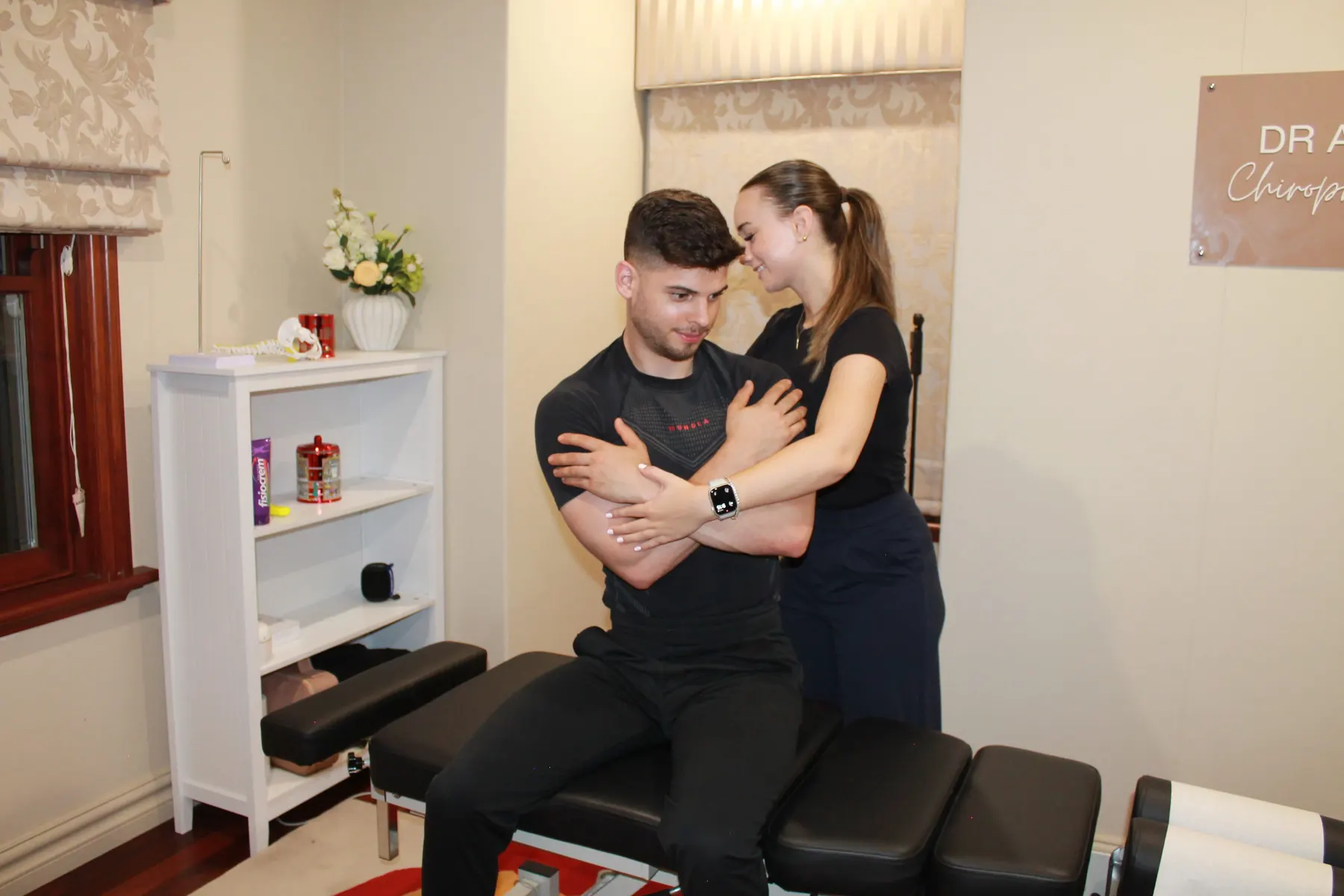
Alicia is also a certified Reformer Pilates instructor, so her assessment looks at how you move as a whole: hip and thoracic mobility, how you load a squat or a lunge, and any asymmetries that could become a problem. Treatment addresses the stiff joints, and the exercise plan addresses the weak ones.
This guide is general information, not a diagnosis. It does not replace an assessment by a registered health practitioner.